The design of AI: Making Artificial Insanity
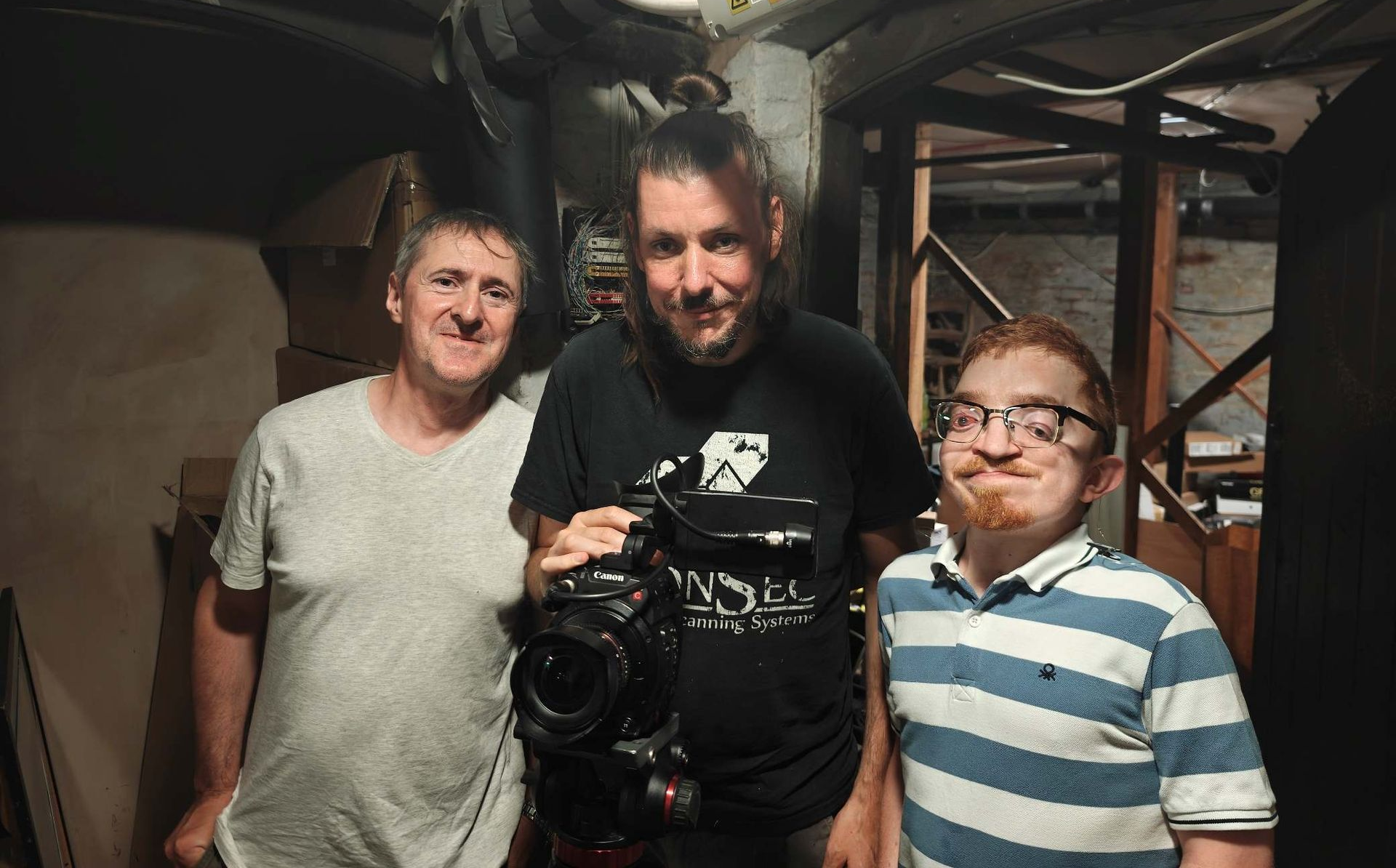
Shot entirely in writer/director Neil Evans’ own flat in Worcester, Artificial Insanity is a five-minute comedy about how artificial intelligence has infiltrated our lives.
Starring Anthony Webster as the human, with the voice of Natalie Nightingale as an AI chatbot, it follows a middle-aged man attempting to get his internet back up and running, only to be stuck in an endless loop of chatbots.
Meeting up with Neil, he says: “My internet went down in my old house, and the first person they sent out wasn’t senior enough to fix the problem. It got me thinking about how, with the use of chatbots instead human customer service, you could easily get caught in this loop where the problem is never fixed.”
This core interaction was something that really appealed to Anthony as well, who in the week before we met, had has his internet issues. “My experience was very amicable. There was a human on the other end, with empathy about my situation and the knowledge to get it fixed, but everyone has had those annoying interactions with chatbots.
“I knew it would appeal to audiences, and it was such an ambitious, well put-together script. Very few scripts can hold their own with only one person on screen, but this felt authentic and Neil seemed to be organised, with a good grasp of how the production was going to work.”
A day shoot
Filming took place across a single day. Anthony says that Neil, alongside sound designer and first AD, Will Middleton, camera assistant/gaffer Rob Middleton, and boom operator/sound recordist Will Bannister brought their A-game to the production. Neil adds special mention to Will Bannister, who was able to capture all the sound needed without any post-production line readings required.
While the film is a five minute chamber piece so it may not sound like a lot to get everything required in a single day, there were some complicated set pieces required by the script. For starters, Natalie Nightingale has pre-recorded her lines, as well as all the sounds associated with the chatbot and the computer system used. “I had Red Dwarf in my mind when I was putting it together, so the idea of using Natalie’s voice to create all the sound effects was really appealing.
With Natalie not on set, it meant that Anthony had to not only act against the purposefully one-dimensional tones of a chatbot but had to time his delivery to suit what was already recorded. Conversely, the two Wills in the crew were tasked with timing the chatbot lines to match his performance. He also had to interact with a virtual computer screen.
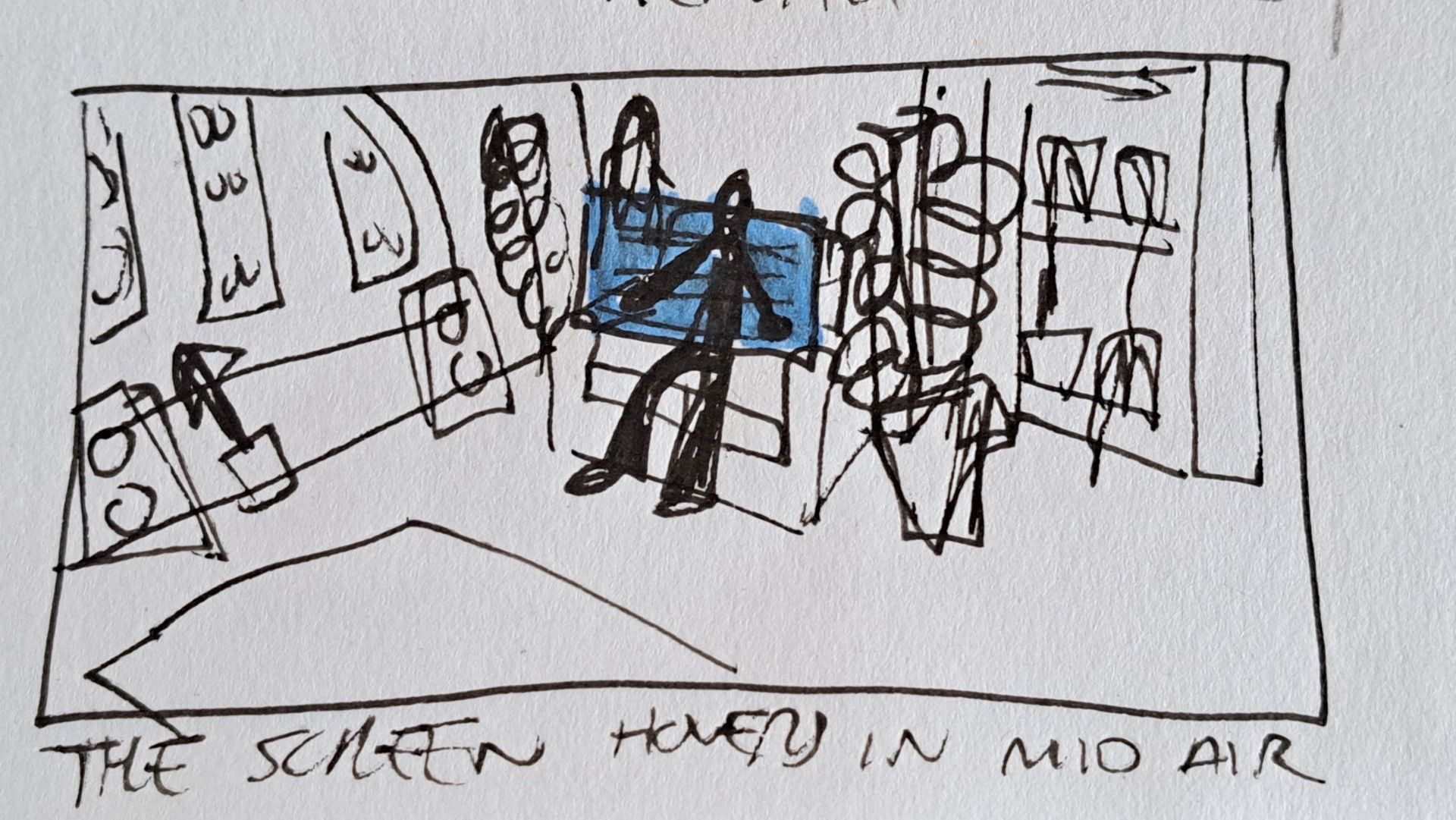
“That wasn’t overly complicated to implement in the film,” says Neil. “It’s essentially a square in After Effects that I could place over the frame, and then a two-frame animation that I designed for the game that Anthony is playing. I think for one scene, I had to rotoscope some aspects of the frame out to make it work, but overall, the effect wasn’t too complicated.
“It was a little trickier on the day, because the animation was going to be based on Anthony’s movement, so we had to plan out how big the screen was going to be and he had to be able to envision that so that he didn’t move beyond that.”
continues...
A generational mix
The computer game is modelled closely on Space Invaders, and this links to another interesting point about the film. Despite the focus on AI, much of the décor comes from older generations. Even the game played suggests a character that is from a different era and perhaps disenfranchised by the pace of change.
“The mix of technologies like the old phone and the tape recorder were there to show that this is someone who has lived through several generations of tech. The phone is there because until recently he still used it, same with the tape recorder. He has migrated to new systems not because the older ones didn’t work but because he has had to,” Neil explains.
The room also contains a collection of fake plants. Neil laughs when we suggest that this is comment on the environmental impact of AI. “It was more of a practical solution, because I made the film for £700,” he says. “But it ended up working in the film’s favour as it added to the artificial feeling. The chatbot isn’t real; the support isn’t real, and nor are the plants.”
He acknowledges that he’s a little ambivalent to AI, because it seems to have become so ubiquitous. “I don’t like it for creative purposes, but for research, for answering questions, there are uses. It shouldn’t be marketed as a creative tool but as an encyclopaedia or a toolset.”
Neil doesn’t give too much away on the topic, but you wonder if he doesn’t believe that AI should be used for something bigger. It is, after all, an effective way to draw together information from multiple sources. In the film, the chatbot admonishes the character for using AI to answer simple questions, to tackle things that are, arguably, unimportant, instead of utilising the data to find solutions to major global issues.
A reunion piece
Neil will be pulling his collaborators together again this October to shoot his next short, Henry - The Eighth Lighthouse Keeper, which will be made at the Kiln in Worcester. “It’s a satirical comedy,” he says. “And I’m pleased to have Anthony back for the film because the lead was written in his voice.”
Matthew Tilt
Instagram https://www.instagram.com/tiltmatthew90/
Follow more about the project on the official production company Instagram https://www.instagram.com/whitetreemovingpictures