
Interview with Midlands horror director John Williams
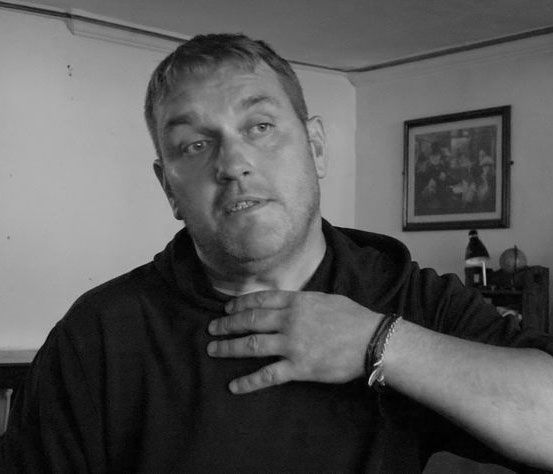
Midlands Movies' Matt Tilt speaks to local filmmaker John Williams about his soon-to-be-released Night of the Screaming Terror, the nature of anthology films, practical effects in his productions and the importance of having a good time when collaborating with others...
Matt Tilt: Congratulations on the film. The premiere seemed to be a great success.
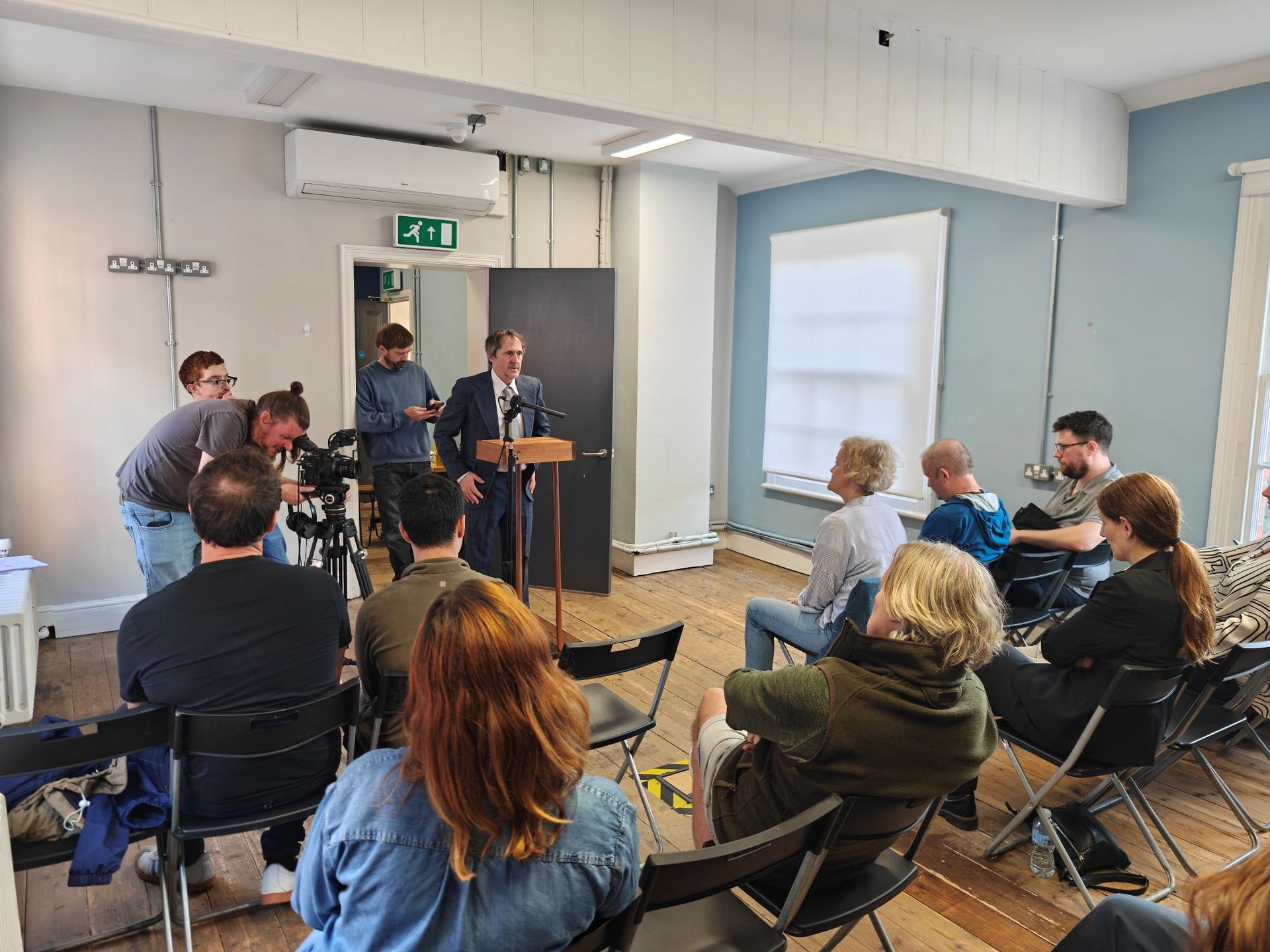
John Williams: Yeah, it went down pretty well, I thought. Obviously with the first screening, there’s always a bit of apprehension because, at that point, I was the only one who'd seen the film, and you just don’t know.
MT: You’ve been busy in the last couple of years. First, Beyond the Witching Hour, then The Beast of Riverside Hollow, and now Night of the Screaming Terror. You said that you wrote this last December and filmed between January and May.
JW: Something like that, yeah. I don't start writing until I've got everything and I've played out every scene up in my head. Then I'll start writing. So, the actual writing process probably took about a week.
MT: This is an anthology. Were each of the stories ideas that you had come up with that won't quite make a feature, or did you always have the idea of the anthology and came up with different ideas for it?
JW: I have done that in the past where I've had little ideas where you couldn't possibly stretch it to a feature. Sometimes it happens the other way. I did a film called Watch Me Sleep a few years back, and that was always ever going to be a short film, but I sort of got a bit carried away with it. Before I knew it was like 90 pages long. When I write, I've got no idea what it's going to be about, I'll sit there and do it almost like a word association. I write a ton of words down, anything I can think of, and I'll just sit there looking at them and sort of piece them together. In this case, I probably would have put aliens, nursing home, and then I'll think of an idea that bases around that and carry on from there.
MT: Do you find yourself gravitating to films or media that you might take influence from? It’s an obvious connection, I know, but I found myself thinking of the Amicus anthologies.
JW: I'm always watching films like that, films like Asylum or Dr Terror’s House of Horrors. All those Amicus and Hammer films. I would never want to sort of rip that up, but at the same time I wanted to nod towards that.
MT: When it came to the practical effects, this felt like your most ambitious film. How did those parts come together?
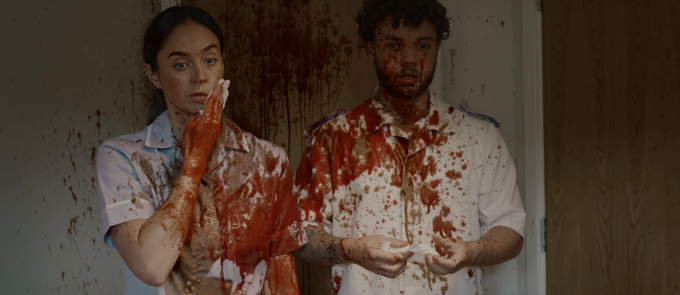
JW: I didn't want to sort of shy away from [the creature design] on this one. I wanted everything on display. So, I contacted my friend Gary Pollard. He's the guy who's responsible for all the creatures in the film. He did the worm from Labyrinth, you know, and one of the Yodas for Star Wars. I'm lucky to be working with Gary. I showed him the script and I drew what I thought one of these things would look like. We kept calling them space maggots, because I thought it looks like a maggot, but bigger and it's from space. And he took it from there really. Designed a lot of concepts of how they can move about. Gary was very instrumental in bringing all that to life.
MT: This is very much a horror comedy. Do you find a struggle to find that balance between those two genres?
JW: I think if you're goin to add a comedy element, it's in for a penny, in for a pound. I think you've got to commit to that. Two of my biggest loves are comedy and horror films, obviously horror edges that a little bit, but sometimes I just can't help myself and I have to put comedy elements in there but if it's meant to be serious, it'll be serious.
MT: It's interesting that you gravitate towards both of those, because they are both genres that rely on that audience interaction. That must be quite nerve-wracking for you when you have your first ever public screening and are waiting for all the points that people are supposed to react to.
JW: There were times when people laughed, and then there was something right after that almost got also drowned out, but that's a good thing, because those will be picked up on the second time.
If it's all laughing when it's a straight horror film, you've got problems. But I think going back to the film with the effects and everything, I couldn't possibly have done like the giant maggots or the possessed pig and the turkeys without it being a comedy. Could you try and make that serious?
Interview continues below...
MT: You've managed to build up a collection of actors that you obviously enjoy working with and have been available for a lot of your films. That must make the filming process easier.
JW: I've worked with some of these people for years now. When I'm filming stuff, it's important that I enjoy it and it's important that you whoever else is there - the person who's making the tea – is also having a good time, because why would you do it? I see these directors shouting at people or producers shouting and think ‘What are you doing? You're making a film; you're doing stuff that you've always dreamed of doing. Enjoy the process.’ So, I tend to surround myself with people who are good to be around, and good with other people. It makes such a nice working environment. So why not use them again? Billy Bannister, the sound guy, he was out on my first film, and he was out on this film. He's a lovely guy. He doesn't have to do this. He's a BBC cameraman. He works all over the world, but he always comes back and does this. He's like part of the family. Then they come to the premiere as well. They see each other again. You're creating this gathering of people.
MT: Is it safe to assume that there is more stuff in the pipeline now?
JW: I'm trying to finish post-production with [Night of the Screaming Terror], like the end credits because they were rushed. Then, I'm just starting to take a few notes down as I'm going along. Things are popping in my head; weird stuff. I've got quite a few ideas on the backburner. I've got whole scripts that I’ve put aside because I’m not feeling something.
MT: Do you go back to some of those?
JW: Sometimes. Watch Me Sleep came from a previous idea about a company that can attach cameras on the inside of a coffin. Then I started writing something else about some guy with a drinking problem who was hallucinating, and I sort of blended them together to make a film. But at the moment I'm just flexing, fiddling around, making notes. I don't know what I'm going to do next.
MT: When you see new people wanting to make independent film of any genre, do you have any advice for them?
JW: Make stuff. I know filmmakers or people who want to make films but never actually ever do it. They’ve got the script, they’ve got a plan of what they want to do and how much money they're going to need, but it's very difficult to get that if you've got nothing to show. So even if you're just going out with your phone and making a film with your mates in the woods, it shows that you can get the film made. Any potential investors are going to want to see something that you've done.
You also learn each part of the process. For my first film, The Mothertown, I had to learn every aspect of it. I got a camera, did the filming over the weekend, taught myself how to do makeup effects before Kat (Durber) came on board. This was before any kind of good drones. So, I knew somebody who got a helicopter, and sellotaped a GoPro to the bottom for the aerial footage. It's a good experience because you’re a jack of all trades I know I'll always get involved in the makeup. I did some of the effects in this film, just a few little bits and bobs here and there, you know, because I enjoy doing it.
You can find out more about the film and it's upcoming release at John Williams' official Facebook page here
Watch the trailer to the film below