
Indie filmmaking and the paradox of reviews

We take a deep dive into the puzzling world of film reviews, and the conundrum low-budget indie filmmakers must deal with when facing critical opinion - as well as how to stay strong and find the positives whatever the feedback...
Why get a review?
Perhaps obvious but we all love a glowing review. A bit of validation, some good promo and perhaps some industry approval isn’t going to feel too bad is it? But in addition to this, there may be some objective feedback, enlightenment to audience reactions and also a place for more people to explore the ideas you were raising. However, there is a flip side when things don’t head in the direction you hoped. We take a look at the unfortunate reality of reviews and the two sides of the critical coin…
Where to get reviews?
If you’re an indie filmmaker then you’re unlikely to get your first-time film a full-page review in Empire magazine. In all likelihood, you’re a grass-roots filmmaker early in your career without a name behind you. That said, don’t discount these big titles entirely. Long shots are exactly that, long shots, but they’re still a shot. More likely though, you could go via an established review site like UK Film Review or Flick Feast. Coverage could also come from the excellent Film Stories too as well as keen film bloggers, like ourselves, who simply have a passion for film in all its forms. We focus on a geographical area, but you can also hunt specialist reviewers and sites. They may be interested in a particular topic or gear their reviews towards indie filmmakers or have a specific interest in a genre.
How to make an approach?
We already have some info about approaching publications in our press release guide. This covers the fundamentals of an Electronic Press Kit (EPK) and what to put in it. Having received thousands of these over the years, the advice comes from a very experienced place. Publishing is going through a tough time with the arts in the UK, a tough economy, limited resources and time, as well as the fight against AI. Any help to get your film across to the right people accurately, efficiently and quickly does everyone a service.

Putting your best foot forward
We may also be old fashioned but do make contact in a professional manner. How formal may depend on who you are approaching. A social media message may be the easy route but file sending, link sharing and attachments can make things complicated. So draft an email template which can be adapted per approach. And it’s often easy to find out the name of the editor or specific reviewers so take a brief look around their website or socials. Make it personal. Being informed and knowledgeable about the organisation as well as your own work is key to being considered someone worth engaging with. A few warnings beforehand - don’t pay for reviews. On a personal level this seems to avoid the all-important objectivity that can be so helpful with regards to honest feedback. Also, keep and eye out for any sites you think may be AI generated. Once again, is that really the sort of value your hard work deserves?

The review itself
Congratulations on completing a film. That itself is a huge accomplishment. Most (in fact almost all) critics have not. They don’t specifically know what went into the process, what conditions it was made under and/or what might have changed during the production. And so, you’ve gone to the trouble (through time, sweat and tears no doubt) of completing a film with little or no budget and a review has been published. Now this is the hard part. What’s the review going to say? Well, first off, don’t forget that you are already brave to put your creative work in front of others to look at. Take that as a sign of confidence, risk-taking and a strong belief in your own projects. There’s a huge Catch-22 however with a review - if it’s positive, it’s a somewhat seal of approval and a multitude of star ratings can be splashed across your next poster. Yet a negative review can feel like a personal attack on your character. But…
Don’t take it to heart
Don’t nullify your feelings - people are allowed to be upset. That’s just part of being human. But how you deal with a less than flattering review and the next step you take can be important. A critic is never attacking you and of course, all art is subjective. For every stellar review there’s another that highlights faults or criticises areas you weren’t even considering. We’re expecting no sympathy here, but having to critique a low budget film where resources are at a premium is not always easy either. Anyone interested in further analysis, I can highly recommed UK film critic Mark Kermode's book Hatchet Job: Love Movies, Hate Critics. Here he tells how “a critic must be willing to inform a filmmaker their work is poor to their face, highlighted by his own real-world apology to Steven Spielberg”. And The Telegraph's film critic Robbie Collin says "his reviews have seen him temporarily blacklisted by two major studios, dressed down in front of a Bafta committee and thrown off a yacht".
Being mindful of limitations is part of understanding a project, but there would be a disservice to everyone if only glowing reviews were ever to be published. Very few respectable reviews are going to be 100% good or bad, because very, very few films are 100% good or bad. A good reviewer can write a glowing review while still pointing out areas for improvement, and that same reviewer can dislike a film and still find aspects of it to praise. It’s worth checking out previously published reviews from the outlets you send to to see if this pattern emerges.
Personal taste (not all films resonate with everyone)
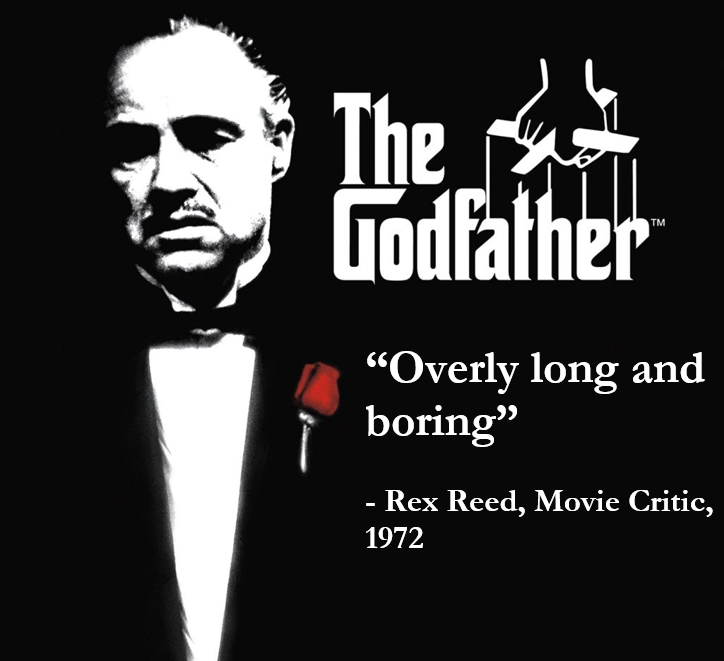
People’s tastes and experiences can mean that a critic just didn’t connect with a project and as many sites don’t distribute to writers by preference then there’s always a chance you get someone not familiar with your work, genre or style. But would you want to? Objective feedback from people who aren’t in an “inner-circle” may provide more insight than a family member who doesn’t want to offend. Legendary movie critic Gene Siskel hated the multi-Oscar winning The Silence of the Lambs (1991) and placed it on his worst-of-the-year list! And here’s 10 more great films that critics thought average. And 30 more right here! So try not to get too bogged down with what a critic thought. You’re in the same company as Oscar winners.
Responses
Remember how hard you’ve worked for this – you made a film and not many people have achieved that. That’s a big accomplishment. But you can’t satisfy everyone. But you CAN control your response. Step back and don’t reply or lash out in the heat of the moment - it seldom ends well. Take a breather and don’t fire off any emails or social posts you can’t take back. Remove emotion and remember aggressive responses could affect your reputation. Try to be gracious. And if you can’t, then best not to say anything. The internet moves at speed and will anyone really remember the review in 6 months time anyway?
Avoid getting in touch with the critics themselves to voice grievances as well. Everyone is easily contactable through social media, but tagging them, or sending messages after a negative review will not endear them to your work. As long as you trust the site, do assume the critic gave their thoughts with good intentions. If the review is wrong on key facts though (cast list, credits, locations) then reach out and get them to correct. Your response may help others when reading the review. The key to an effective response is to be polite and never combative. A “thank you for taking time to review my film” may be the best option - simple and respectful.

Moving forward
Spinning a negative review into a positive by getting social followers to read it to see if they agree or disagree is a VERY dangerous game however. Think of the Streisand Effect and exacerbating the negativity and amplifying the criticisms to even more people. Not all publicity IS good publicity despite what is said. A more positive step is to potentially leverage the review as ‘fuel’ for your next steps. Ask yourself. What areas were positive? Are there any constructive insights? Sometimes, even the roughest of reviews may contain a hint of truth.
Final words
In the end, a good or bad review on its own rarely leads to any film’s success or failure and let’s be blunt here, feedback is always part of the process and part of the film industry. Remember, your confidence in your own voice is the only thing that matters. No good reviewer goes out of their way to trash a film. Both filmmakers and critics love movies - it might not always feel like that, but they're all working towards the same goal of ending up enjoying great films. But not every film connects with everyone, and that’s a good thing - what other people think of you, or your work, is completely out of your control. Be bold. Be brave. And keep making your amazing personal films and to heck with what those darn critics think.
Michael Sales