Review of The Wizard of the Kremlin
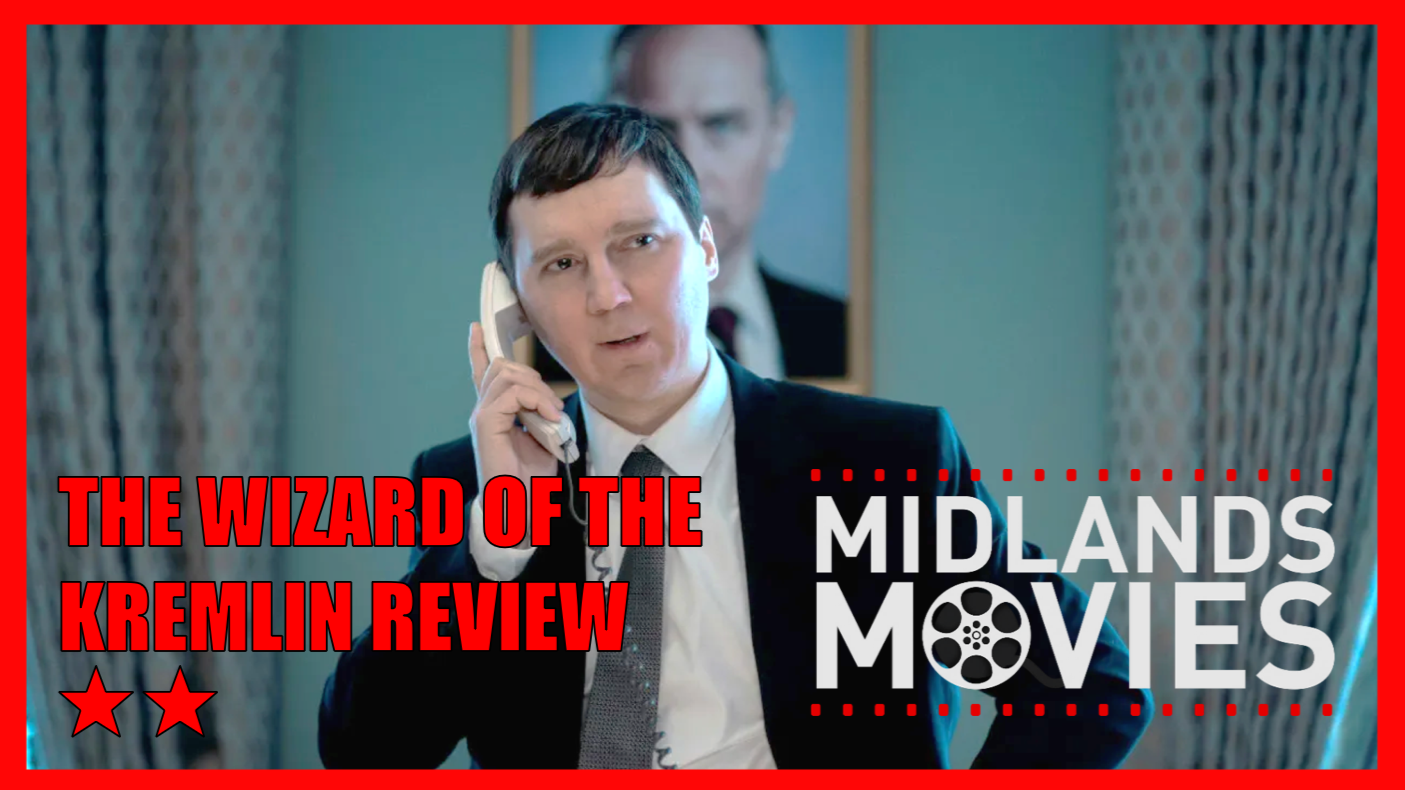
The Wizard of the Kremlin (2026) Dir. Olivier Assayas
An ominous (ironic?) disclaimer about not taking fiction as fact opens this story about the oppressive Russian regime and one which covers the rise of President Putin through the eyes of fast-rising spin doctor Vadim Baranov (Paul Dano).
Jeffrey Wright’s strange noir-detective voiceover structures the framing device as he interviews Dano’s character about his pathway to power before Dano himself recalls, in excruciating detail, the events leading up to the present.
I’m not sure I can summarise all the film’s events - it’s basically everything that’s ever happened in the period - but in short we move from Dano’s bohemian origins via Boris Yeltsin’s decline before Prime Minister Putin picks up the reins.
It’s listed as a satire, nay even a comedy, but you’ll struggle to find many sharp jibes and certainly no laughs except the actors’ VERY English accents. Jude Law as Putin has the look and facial expressions but his voice is pure cockney. What?
Dano fares even worse though. His (non-stop) voiceover is delivered stoically mixing half a misjudged English posho and a weird cod-Phantom Menace monotone. And it’s constantly present over the speed-run of historical (and drama free) scenes that whack you over your head with their message. And if you miss them, don't worry, the voiceover will tell you. And sadly, the performance serves only to give Tarantino more ammunition.
A talented - no, world class - cast cannot overcome the messy structure jumping from moment to moment with no strong backbone. But in the positive column is that it's so crammed with story, characters, history and politics that audiences may find at least one of those delivers.
It’s certainly overstuffed and its tone, acting, pacing and structure swing wildly from innovative to utterly baffling, yet during the second half - after Law’s arrival as potty Putin - things do get a bit more lively and intense. Quite a clever move of moods reflecting the flow of events and changing of the guard.
Arresting his enemies - politically and imagined - Putin ruthlessly implements his power change as he’s called the “Tsar” and shares his admiration of Stalin’s dictatorship. Ruling by fear, and with his war with oligarchs and the Ukrainian people, the film demonstrates that no one or no thing is safe from his revolutionary aims for his “great” Russia.
Honourably tackling themes of oppression, political abuse and media tyranny, The Wizard of Kremlin needs to be so much more focused to really give each of these - or even just one - the in-depth critical eye they deserve.
The subject matter is ripe for deconstruction but this mostly entertainment free zone feels like being imprisoned in a gulag. The Wizard of the Kremlin therefore admirably takes a swing at the acts of a despotic authoritarian, but for the regular viewer it’s sadly like watching an audio book. There's an argument for you to save some time and simply read the history on Wikipedia. It may give the depth you need. It may also be more fun too.
★★
2 / 5
Michael Sales
Instagram / Facebook / X @midlandsmovies